
Speed versus Flexibility: Why Traditional SMT Metrics No Longer Work
March 5, 2026
For years, the electronics manufacturing industry relied on a simple equation: higher placement speed = better productivity. This logic made sense in stable, high-volume environments where product changes were rare and lines ran the same assemblies for days or even weeks, speed versus flexibility was never the issue.
But today’s SMT world is very different.
Markets are fragmented. Products evolve constantly. Batch sizes are shrinking. Variants are multiplying. Components availability and cash exposure of high stock levels have been some other reasons for a change in the production model.
In this environment, traditional metrics such as placement speed (CPH) are no longer reliable indicators of real performance.
The SMT industry has entered the high-mix era, and this requires a completely different way of measuring productivity.

Why Traditional Metrics Fail in Modern Production
1. Machine Speed ≠ Line Productivity
A machine’s nominal speed reflects only what it could achieve under ideal conditions ,not what actually happens on the shop floor.
In high-mix environments, performance is limited not by theoretical CPH, but by:
- Unknown BOM and components packaging
- Changeover frequency
- Feeder preparation time Vs Production time
- Material supply interruptions
- Last minute component deliveries
- Line balancing difficulties
- Operator workload
- Flow disruptions and customer priorities
In this context, a stable machine designed to manage variability delivers greater overall line productivity than a very fast machine whose configuration and feeders are optimized for speed rather than for frequent changeovers.
2. The Real Cost Driver Is Variability
When batch sizes are small and changeovers frequent, stability becomes more important than raw speed and material flow continuity becomes a critical performance driver.
In high-mix production, the key question is no longer: “How fast can you place components?”
But rather: “How quickly can you change over, stabilize, and restart production without losing control?”
3. Productivity Is Systemic , Not Machine-Centric
Traditional SMT metrics evaluate machines in isolation.
In reality, performance depends on:
- How the machine integrates into the overall process
- How human tasks align with the workflow
- How materials are prepared, verified, and delivered
- How data is collected and analyzed
- How quickly deviations are detected and corrected
A machine designed for variability, simplicity, and repeatability stabilizes the entire system.
Europlacer’s Response: A Fully Integrated high-mix Ecosystem
Europlacer has developed a complete ecosystem that addresses the limitations of traditional machine-centric metrics.
1. Machines Designed for Variability
Europlacer placement machines and feeders are designed to:
- Maximise PCB throughput on a variable production runs
- Handle all component types and formats
- Accept all packaging types (including non-standard formats)
- Maintain repeatability despite product changes
- Absorb technical variability without compromising performance
- Allow quick start for lower size batches
The priority is not raw speed – it is controlled process continuity.
2. Software That Structures, Secures, and Synchronizes the Process
- ii-RC: a central platform that aligns operations across the entire line, including remote stations, ensuring consistent changeovers and stable flow. NPi efficiency and Integrity control.
- ii-Tab: a mobile shopfloor companion that secures material preparation, kitting, and feeder setup, areas where high-mix productivity is often lost.
- EPiiCENTRE: a native IPC CFX data engine providing reliable, contextualized, and actionable insight into real process performance.
This ecosystem enables manufacturers to act on facts rather than assumptions.
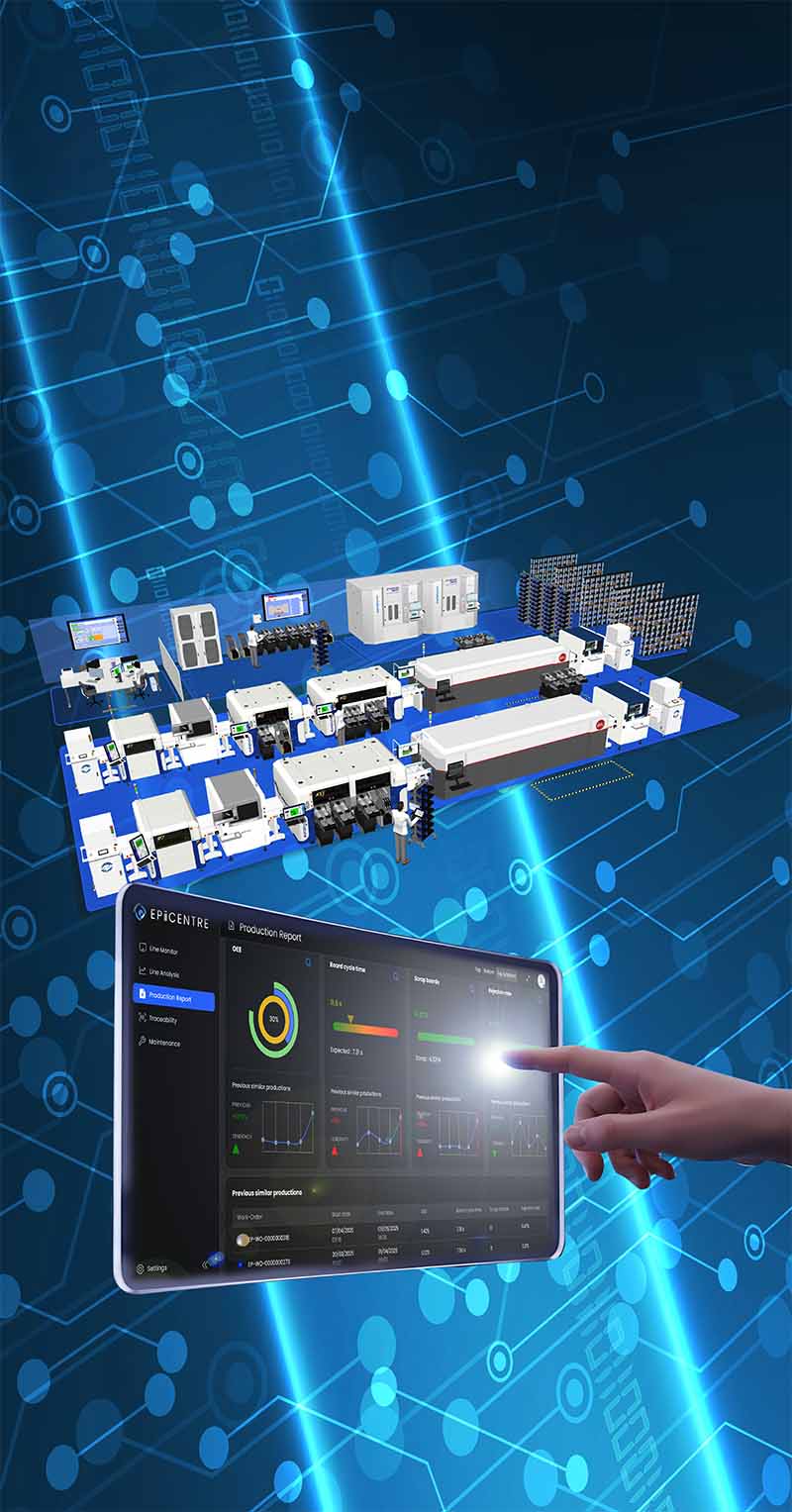
3. Native IPC CFX Integration: Reliable, Real-Time, Comparable Data
In high-mix environments, approximations are dangerous because small deviations accumulate and silently create major performance drift.
By adopting IPC-CFX early and embedding it natively:
- Data is generated directly by the process
- Events are contextualized and consistent
- Performance issues become visible and measurable
- Human and technical resources can be dynamically adjusted
IPC CFX is not an add-on, it is the foundation of process coherence.
Next steps:
Want to find out how Europlacer can help deliver high-mix manufacturing to your facility? Contact us to have a discussion today.
More In-the-mix articles

September 21, 2026
In high-mix, low-volume production, a product may not be built again for months or even years, and batches are often too small to recover from a drifting process. For aerospace, defence and medical manufacturers, that makes every manual adjustment at the printer a direct cost to both capacity and quality. This article looks at how automated calibration, controlled squeegee pressure, closed-loop SPI and built-in traceability remove those variables from the first stage of the SMT line.
Find out why a stable print is the foundation of a predictable HMLV line.
July 13, 2026
In High Mix electronics manufacturing, the first board off the line is no longer just a setup step - it's where margin is won or lost.
Discover why First Board Right, powered by Europlacer's Process Integrity and Production Integrity, is becoming one of the most important economic levers in SMT production.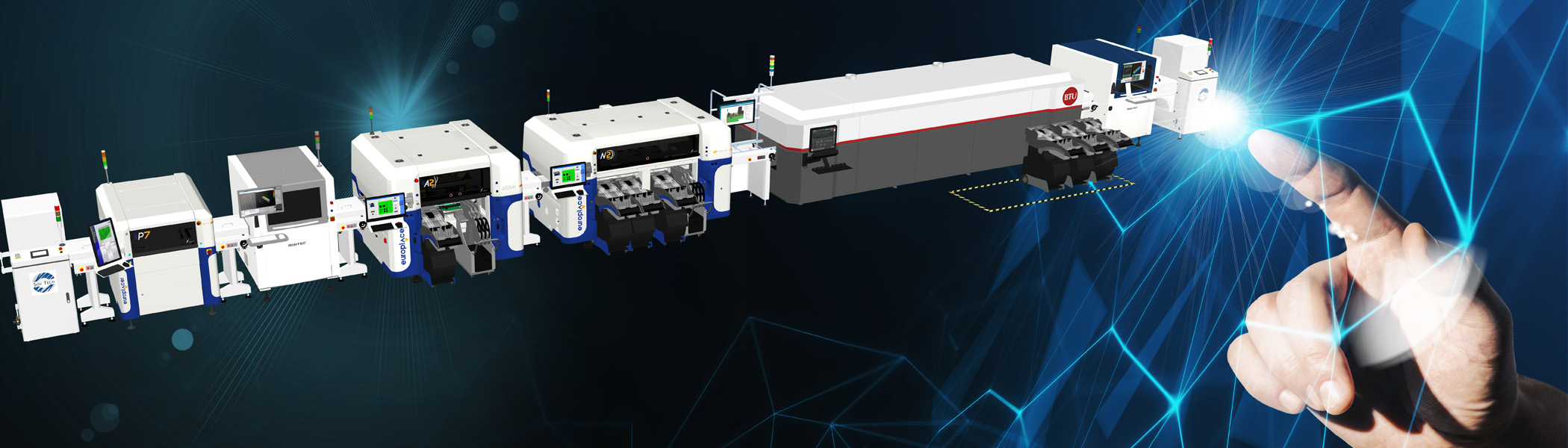
June 2, 2026
The real challenge of Industry 4.0 isn't generating more data, it's turning it into decisions you can act on. Europlacer's strategy builds on two complementary standards: Hermes for machine-to-machine continuity, and IPC CFX for transforming production events into business intelligence.
Discover how Hermes, IPC CFX, EPiiCENTRE and ii-TAB all connect the shop floor to the business, from the physical movement of every board to the decisions that drive productivity.