
Reducing process variation in HMLV sensitive industry electronics manufacturing through stabilized printing
Published: September 21, 2026
High mix does not have to mean high process variation
High-mix manufacturing is often defined by its variety, but success in this environment depends on consistency. In sectors like aerospace, defense, and medical electronics, HMLV (High-Mix, Low-Volume) production presents a unique paradox. A manufacturer may produce a complex assembly today and not see that specific design again for two years. When that product returns, the goal is not simply to build it. The goal is to replicate a previously validated process without wasting time on trial and error. Flexibility is the tool that allows you to handle many different products.
Process control is the discipline that allows you to manufacture them reliably. Productivity in these mission-critical environments is not about how fast a machine moves. It is about how often the process stops for adjustments. Any moment spent on manual intervention or first-board optimization is lost capacity. To improve output, manufacturers must shift their focus from cycle times to the elimination of process variables.
The productivity challenge of mission-critical production
Traditional high-volume manufacturing focuses on optimizing a single, long-running process. In HMLV production, the constraints are different. Batches are small. Components are expensive. The boards themselves are often high-value, multi-layer substrates where scrap is a significant financial loss. Skilled labor is also in short supply, making it difficult to rely on operator intuition to fix process drift. In this environment, productivity is eroded by repetitive setups and the need to re-validate processes. If a technician must manually adjust squeegee pressure or clean a stencil three times to get a good print, the schedule slips.
The pressure to improve lead times often conflicts with the strict traceability requirements of mission-critical industries. The solution lies in how we manage the very first stage of the SMT line. Solder paste printing is where the majority of defects originate. If the print is unstable, integrated pick and place systems cannot compensate for the resulting errors. Improving HMLV output requires a printing process that remains stable across every changeover.
Why printing is critical as batches shrink
When a batch consists of only fifty boards, you do not have the luxury of a long stabilization period. In high-volume settings, a process might drift slightly, but the operator has time to notice and correct it. In HMLV, the batch might be finished before the drift is detected. This makes every setup and every intervention proportionally more significant to your total cost. When a product returns after a long absence, the objective is to return to a known state of control immediately. This requires a machine that can self-calibrate and maintain its own mechanical integrity. Without this foundation, the manufacturer is forced to rediscover the process every time they change a stencil or a product.
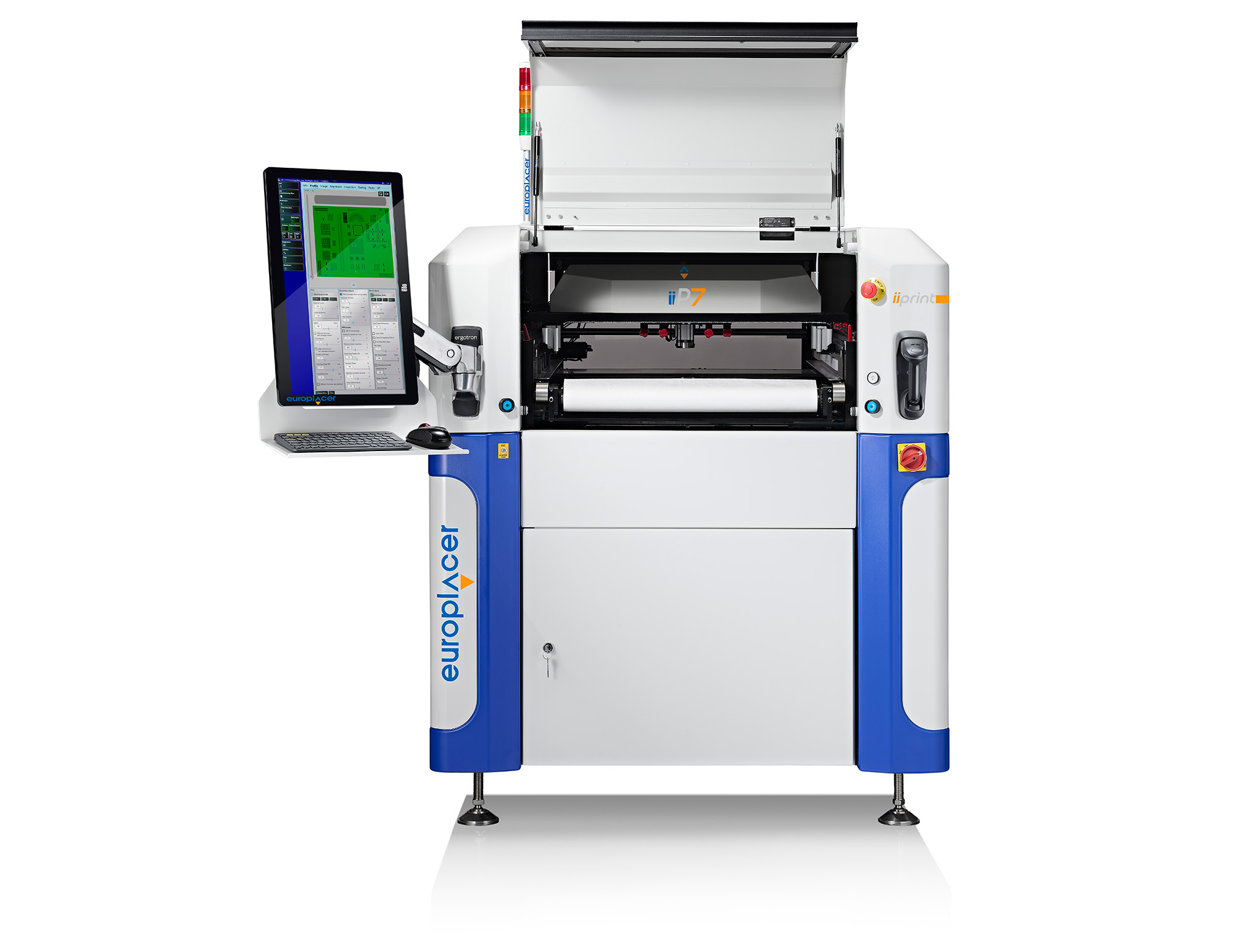
This discovery phase is the enemy of productivity. The Europlacer ii-P7 printer addresses this by focusing on the removal of mechanical and operational variables. The goal is to ensure that the machine is correct before the first board even enters the system.
Returning to a known process with SmartCal
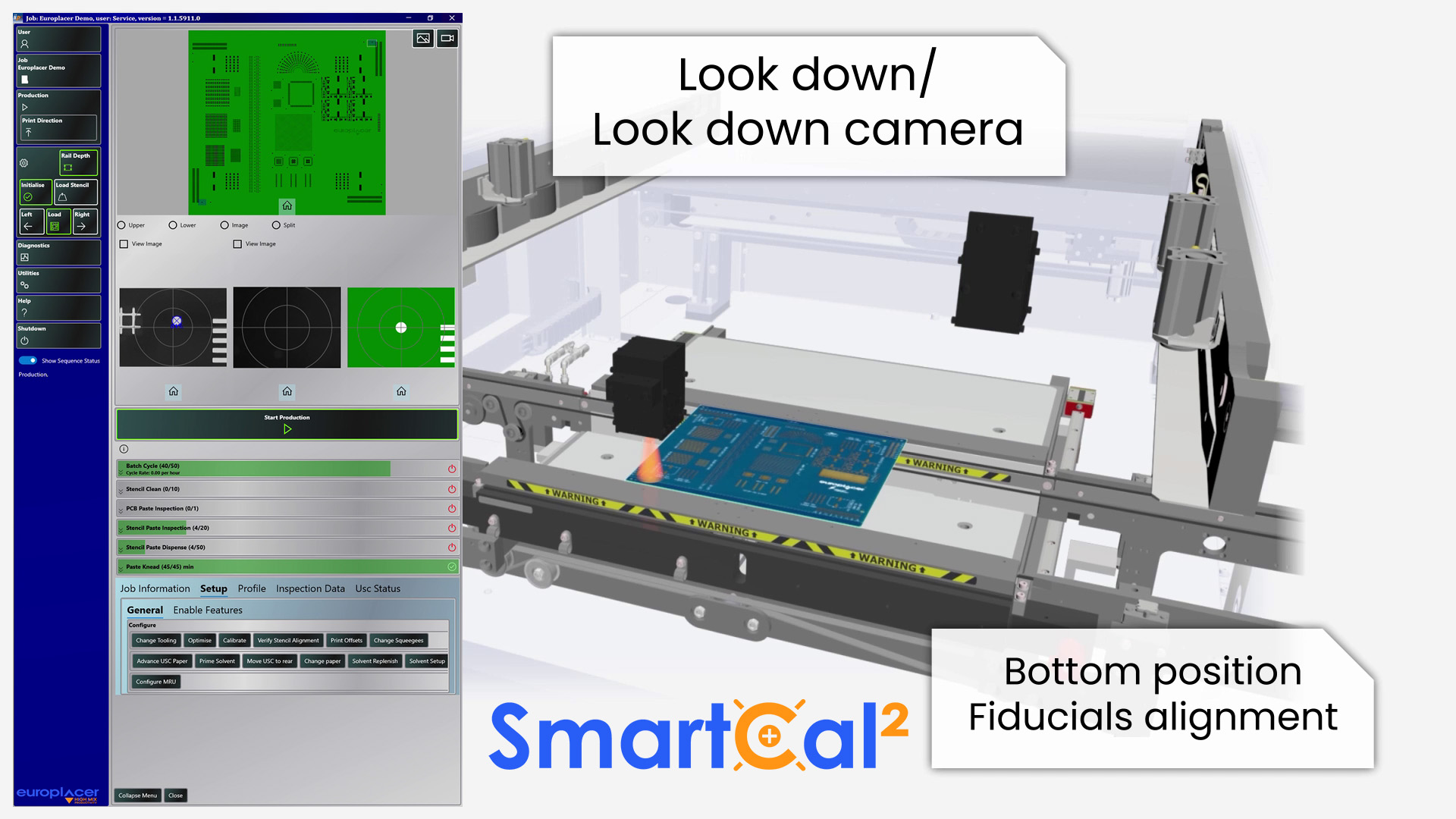
Process control begins with the machine itself. In many environments, the accuracy of the printer is assumed until a defect occurs. For HMLV manufacturers, waiting for a defect is not an option. Manual calibration is time-consuming and introduces human error. The risk is that the machine alignment might be slightly off, leading to offset prints that require rework. Europlacer uses SmartCal to remove this risk. This technology allows the machine to calibrate itself automatically. By maintaining a constant state of alignment, the machine ensures that the mechanical baseline is always correct.
The benefit to productivity is clear. Operators no longer need to perform manual checks or doubt the machine’s accuracy during a changeover. When you know the machine is correct, you can focus entirely on the process. This automated assurance is the first step in moving away from a reactive manufacturing culture.
Controlling the process through pressure management
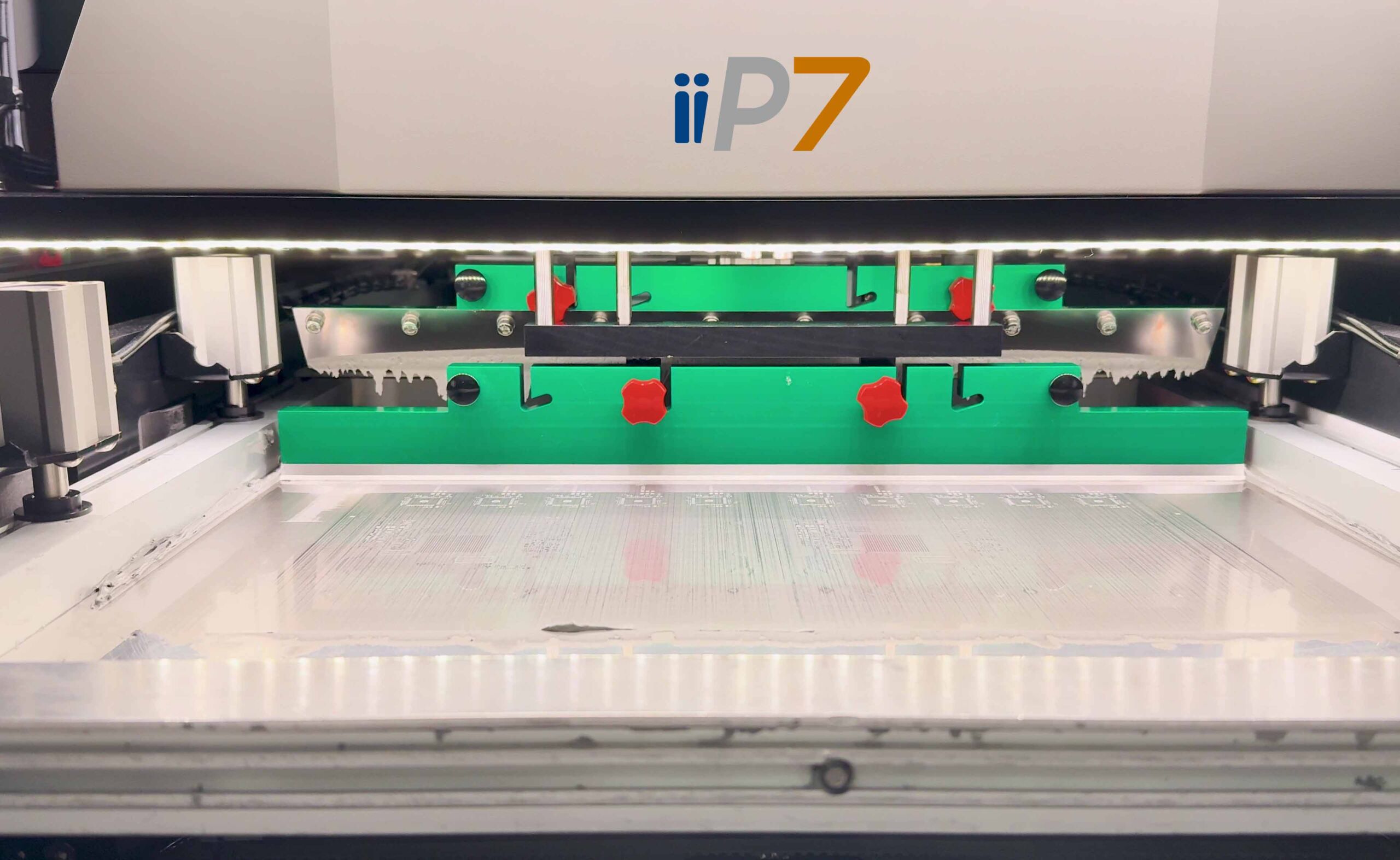
Squeegee pressure is a primary variable in solder paste deposition. If the pressure is inconsistent, the volume of paste will vary. Too much pressure can scoop paste out of the apertures. Too little pressure leaves a thick, uneven layer. In many shops, this is managed by operator judgment. This is a significant manufacturing risk because different operators have different levels of experience. The result is process drift that causes intermittent bridge or short defects. The ii-P7 uses a unique squeegee system that maintains precise pressure control across the entire stencil. Instead of relying on manual tweaks, the system applies the exact force required consistently.
This control removes the need for first-board optimization. By standardizing the physical interaction between the squeegee and the stencil, you ensure that the second board is identical to the first, and the last board is identical to the rest. This stability is essential for maintaining throughput without sacrificing quality.
Moving from inspection to correction with SPI Closed Loop
In a modern SMT line, inspection is standard. However, inspection that only identifies failures is a post-mortem tool. To increase productivity, manufacturers must move from inspection to correction. The risk in HMLV is that a process can drift due to environmental changes, like temperature or humidity, affecting the paste viscosity. Manual correction of these factors is slow and prone to error.
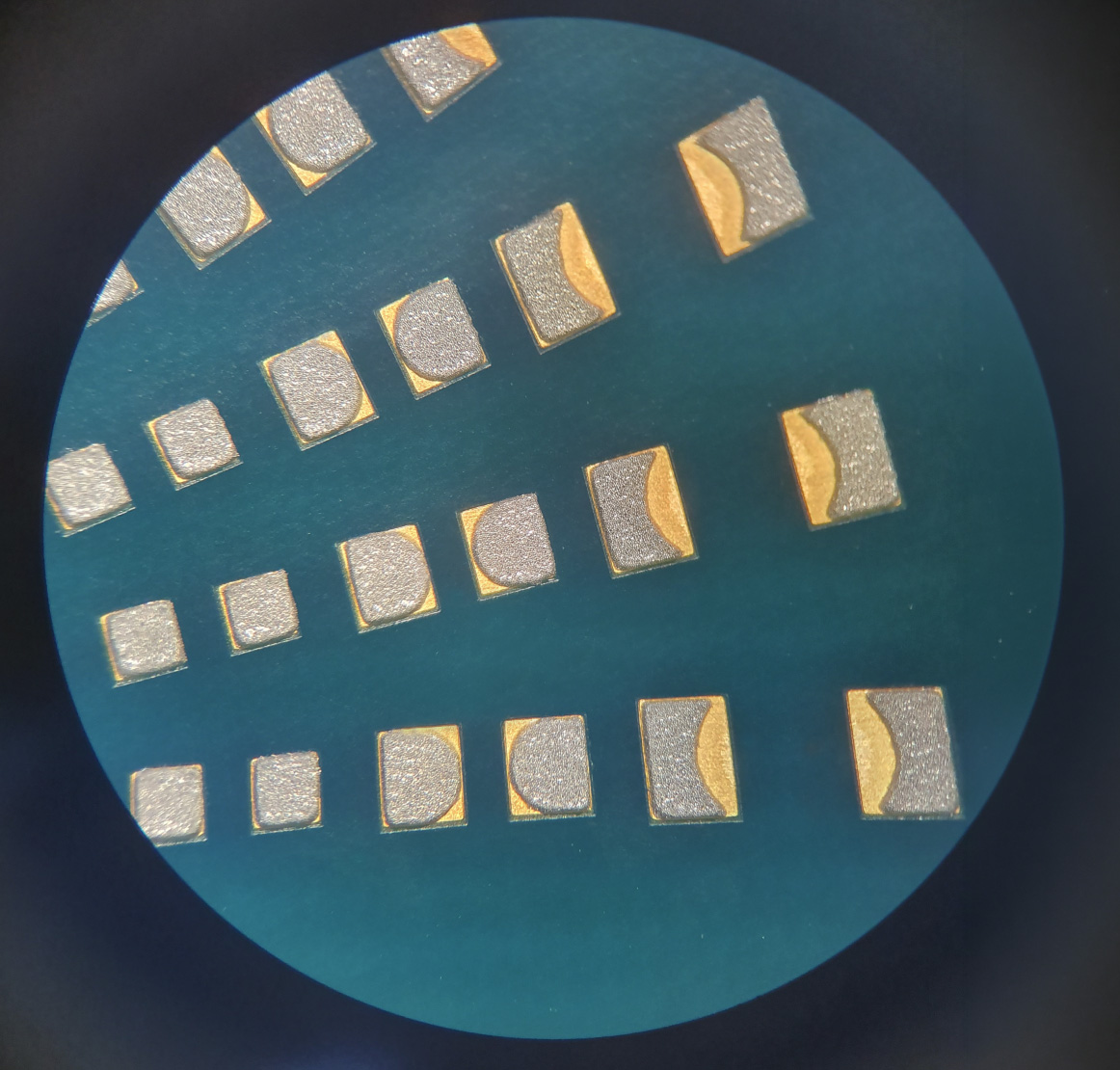
By implementing a closed-loop system between the Solder Paste Inspection (SPI) machine and the printer, the line becomes self-correcting. The SPI system analyzes the paste deposits and communicates alignment corrections back to the printer in real-time. This eliminates the need for an operator to stop the line to make adjustments. It prevents defects before they happen. For HMLV manufacturers, this means that even small batches benefit from the same level of optimization usually reserved for high-volume runs. You get the benefits of a stabilized process without the overhead of manual monitoring.
Building traceability from the first SMT process
For aerospace and medical manufacturers, traceability is a regulatory requirement. The challenge is that capturing data can often slow down production. The risk is that if data is not captured at the source, the genealogy of the product is incomplete. This creates massive headaches during audits or quality reviews. Europlacer addresses this through S-Track – a traceability option for the ii-P7 screen printer that adds a label feeder inside the machine, so pre-printed barcode labels can be picked and placed anywhere on the PCB straight after printing, and then scanned before the board moves on.
Because printing is the first step in SMT assembly, every board is traceable from the very start of the line, with support for reading 1D, 2D and laser-etched codes across full panels. It can run standalone or alongside the ADu (Advanced Dispense unit), and its CFX and Hermes compatibility means the data it captures can feed straight into your wider factory systems. This functionality ensures that traceability begins at the very first SMT process. The system records the stencil used, the batch of solder paste, the squeegee parameters, and the board ID. This data is linked automatically. The operational benefit is twofold. First, it ensures total compliance with mission-critical standards without manual paperwork. Second, it provides a data-rich history that can be used to analyze process performance over time.
When you have a complete digital record of the print process, you can identify patterns that lead to better long-term yield improvements. This turns traceability from a burden into a strategic asset.
Removing variables to recover productive time
Productivity in HMLV manufacturing is the result of removing variables. Every time a manual adjustment is replaced by a controlled, automated process, capacity is recovered. The ii-P7 printer is not just a piece of hardware. It is a system designed to stabilize the most volatile part of the SMT line. When the machine is calibrated, the pressure is controlled, the loop is closed, and the data is tracked, the manufacturer gains a level of predictability that is often missing in high-mix environments. This predictability is what allows a factory to meet aggressive deadlines for complex products.
Flexibility allows you to accept the work. Process control allows you to deliver it profitably. As we look toward the future of connected manufacturing, these principles of stability and data integration will become even more vital. By focusing on process control today, manufacturers prepare themselves for the increasing complexity of tomorrow’s electronics.
Summary
A stable print is the foundation of a predictable HMLV line, but it is only the first step. Once the paste is on the board, the pick and place machine has to maintain that same level of control across frequent changeovers, a wide variety of components and board types, and products that may not have been built for months or even years. The same principles apply here too: remove manual variables, return to a validated process without trial and error, and capture the data that proves every board was built correctly. In our next In the Mix article, we will look in detail at how placement technology builds on a stabilized print to protect both quality and productivity in high-mix environments.
Next Steps
Does your current printing process struggle with the demands of HMLV production? Why not contact us to discuss how stabilizing your variables can recover productive time. Connect with our engineering team for a process review.
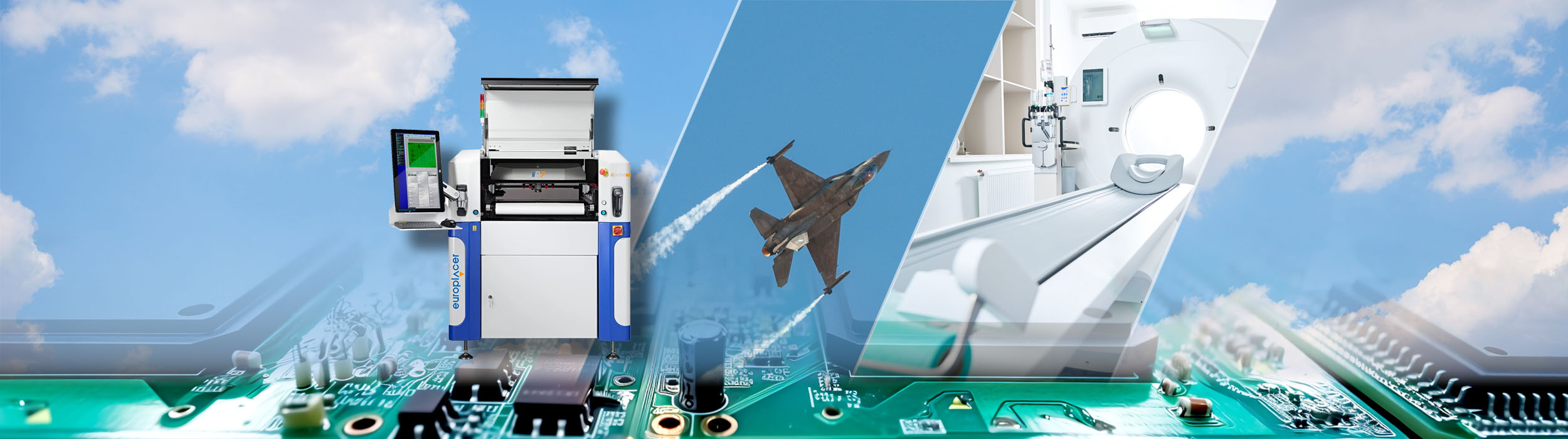
September 21, 2026
In high-mix, low-volume production, a product may not be built again for months or even years, and batches are often too small to recover from a drifting process. For aerospace, defence and medical manufacturers, that makes every manual adjustment at the printer a direct cost to both capacity and quality. This article looks at how automated calibration, controlled squeegee pressure, closed-loop SPI and built-in traceability remove those variables from the first stage of the SMT line.
Find out why a stable print is the foundation of a predictable HMLV line.
July 13, 2026
In High Mix electronics manufacturing, the first board off the line is no longer just a setup step - it's where margin is won or lost.
Discover why First Board Right, powered by Europlacer's Process Integrity and Production Integrity, is becoming one of the most important economic levers in SMT production.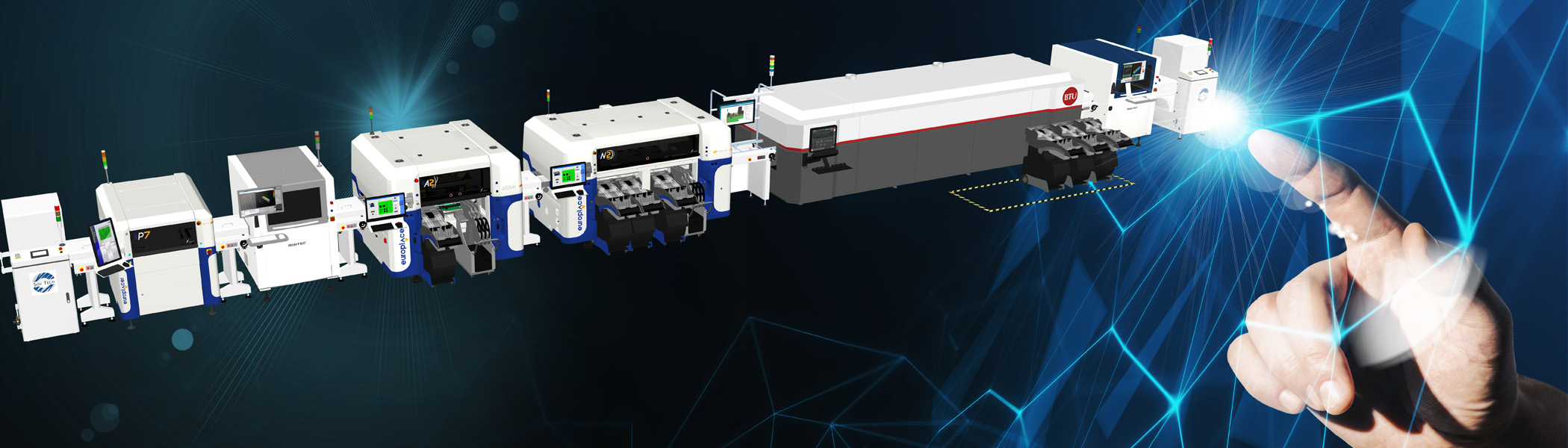
June 2, 2026
The real challenge of Industry 4.0 isn't generating more data, it's turning it into decisions you can act on. Europlacer's strategy builds on two complementary standards: Hermes for machine-to-machine continuity, and IPC CFX for transforming production events into business intelligence.
Discover how Hermes, IPC CFX, EPiiCENTRE and ii-TAB all connect the shop floor to the business, from the physical movement of every board to the decisions that drive productivity.