
Electronics Manufacturing for Critical Industries: From Component Control to Process Integrity
November 12, 2026
For industries where reliability is non-negotiable, every manufacturing step must be controlled, checked and traceable. In our previous article we looked at how quality and traceability are secured at the printing stage. Let’s now talk about Europlacer’s vision from the perspective of the overall process.
In certain industries, the quality of an electronic circuit board is not defined simply by whether it works when it leaves the factory. A medical device, automotive system, communications system or defence application may need to operate for several decades in extremely demanding environments.
However, this goes far beyond productivity: manufacturers must ensure repeatable processes, prevent non-conformities, keep components under control and retain proof of manufacture. A compliant board is no longer enough. You have to be able to show how, with what and under what conditions it was made.
At Europlacer, this requirement is at the heart of our approach: we combine production flexibility, process control, built-in checks and digital continuity to secure every manufacturing step.

Different sector requirements, one imperative: process control
Each industry has its own standards and constraints. In aerospace, EN 9100 requirements, IPC Class 3 criteria and process qualifications demand rigorous control of configurations, changes and manufacturing repeatability. In defense and space, long-term reliability, the prevention of counterfeit components and control of production data are critical concerns.
In the medical sector, requirements for traceability, record integrity and process control are very high, especially in environments subject to ISO 13485. In automotive, IATF 16949 requirements and quality targets expressed in ppm call for repeatable production and the ability to identify exactly which products are affected when a problem arises.
Despite the different standards required by each industry, expectations converge on four core objectives:
- Preventing errors rather than detecting them after manufacture.
- Guarantee process repeatability and integrity.
- Ensure reliable traceability of components and operations.
- Use production data to demonstrate compliance and continuously improve performance.
These are the challenges Europlacer’s solutions are designed to address.
Compliance begins before the first placement
A board’s compliance is built well before it reaches a placement machine. A wrong part reference, a mismatch between a reel and a feeder, a component that does not meet its MSL requirements or incorrect preparation can all compromise the entire production run, and in critical industries these risks cannot be left to operator vigilance alone.
Europlacer addresses this by building digital preparation and process verification into its solutions. Thanks to offline preparation and material management solutions and the ii-Tab applications, loading operations can be verified by identification and cross-checking against production data. Component and location management, together with connected storage solutions, also helps make material availability and identification more reliable.
The aim is simple: to stop a preparation error from becoming a production non-conformity. This preventive approach, inspired by poka-yoke (Japanese for “mistake-proofing”, designing processes so errors can’t happen or are caught immediately), strengthens reliability while preserving the flexibility needed in High Mix environments.
Beyond the camera: checking every component before assembly
In a traditional SMT line, vision systems mainly check the geometric characteristics, position and orientation of components. But a component that looks right is not necessarily electrically compliant. A resistor of the wrong value, an incorrect capacitor or a diode with unexpected characteristics can pass optical checks and be assembled onto the board.
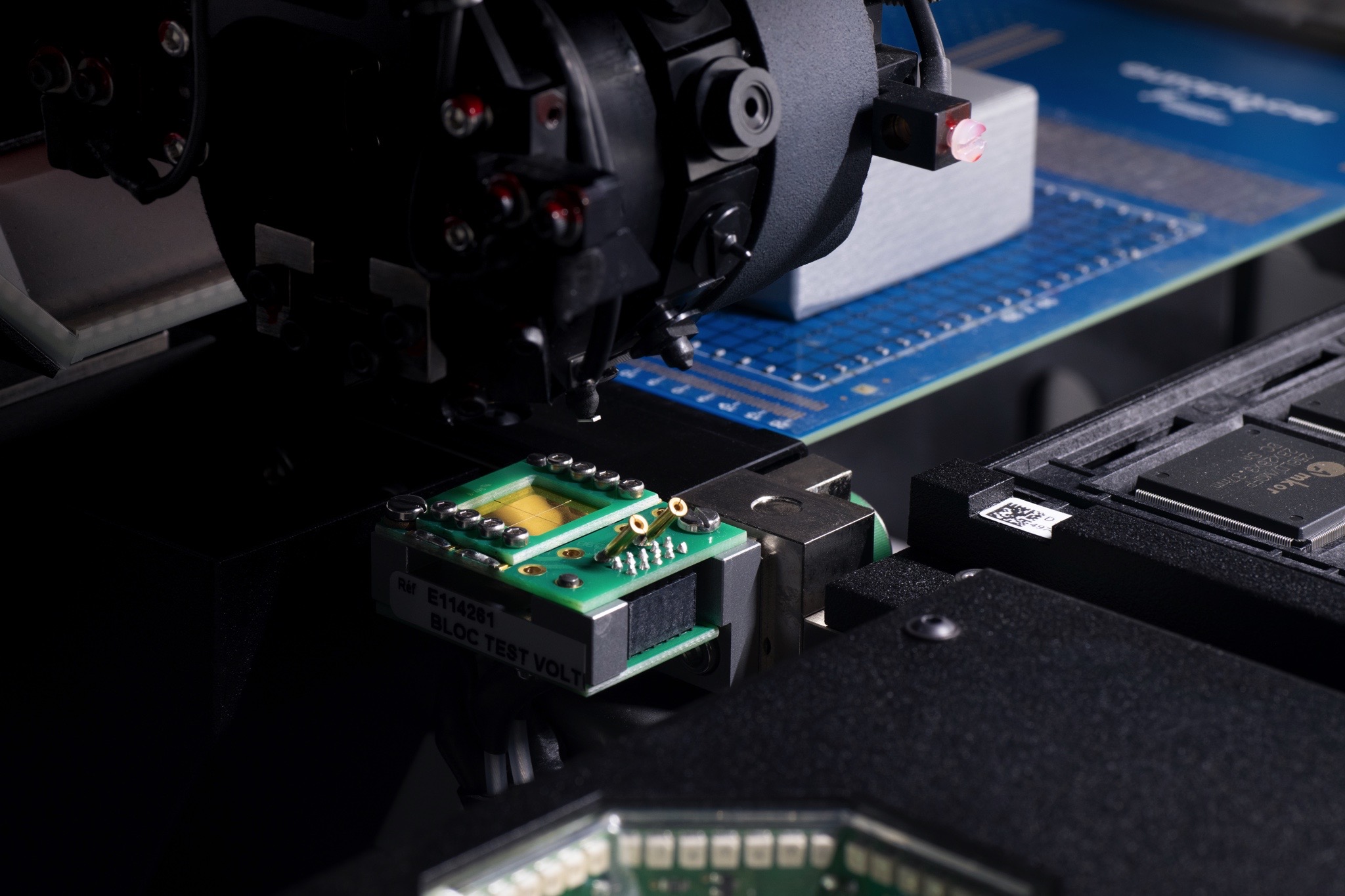
For the most demanding industries, Europlacer offers a distinctive answer: the LCX embedded electrical tester. This system measures the electrical characteristics of compatible components directly between pick-up and placement. Depending on the component family, it can check resistance, capacitance and inductance values, or certain semiconductor characteristics.
Combined with the other checks built into Europlacer machines, it is part of a sequence of verifications:
- Verification of the presence and position of the component before pick-up.
- Confirmation of the pick-up by the machine’s sensors.
- Optical analysis of geometry and orientation.
- Electrical verification with the LCX when the component is compatible.
- Placement process control.
When a measurement reveals a non-conformity, the component can be rejected before it is assembled. The difference is significant: instead of discovering an error on a board that has already been built, Europlacer lets you intervene before the non-conforming component is placed.
This approach helps reduce the risk of rework, scrap and defects that may escape conventional checks. It also adds a barrier against certain component anomalies, which is especially relevant for aerospace, space, medical and defense applications.
Artificial intelligence also reinforces this approach. With IA Vision Assist, Europlacer uses AI to analyse component images in real time, confirm their presence before placement, and detect certain unusual situations that are difficult to identify using conventional inspection methods.
(This topic will be covered in our next blog article.)
Running the process you defined, every time
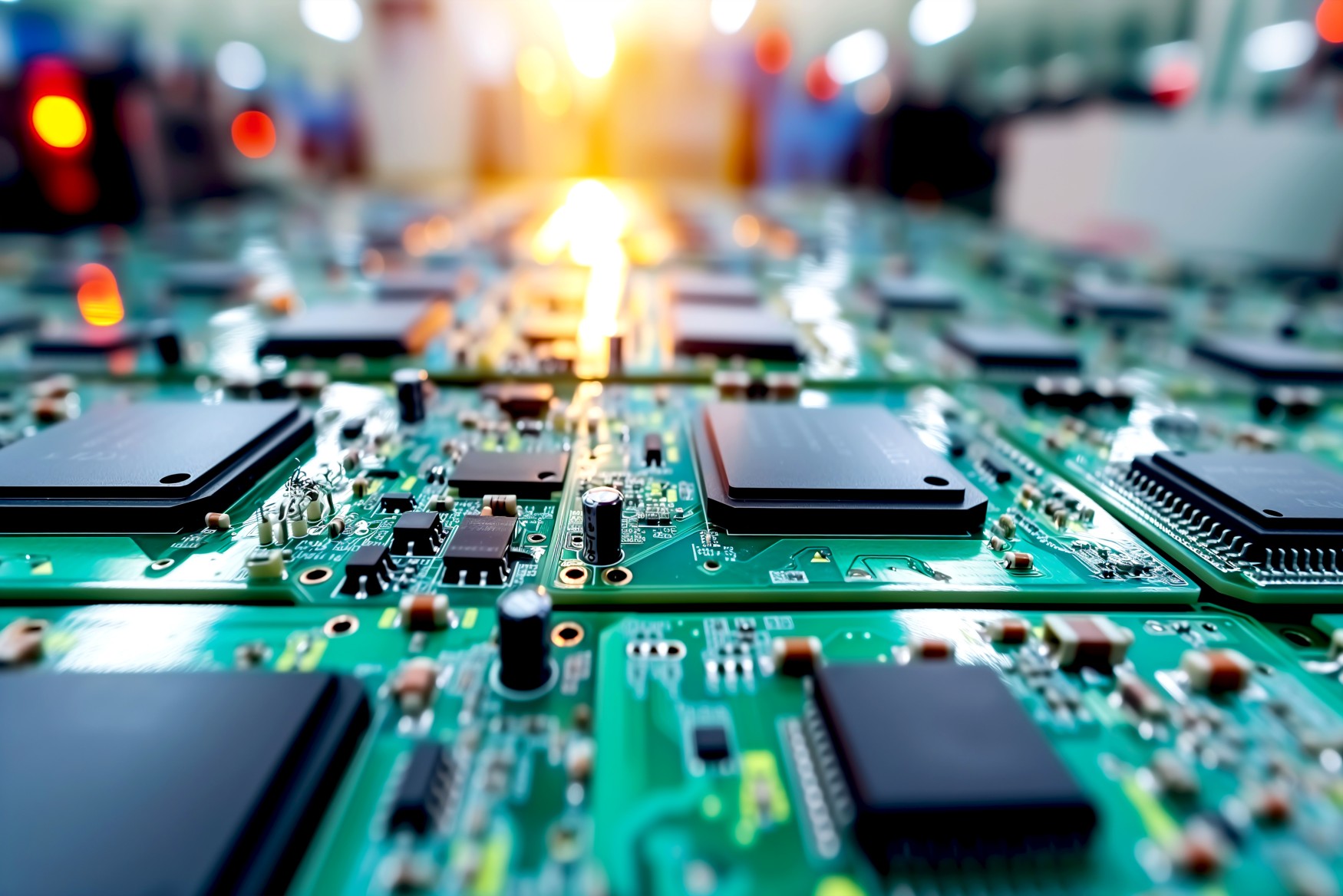
In regulated industries, a product’s compliance depends as much on the final result as on how well the manufacturing process is controlled. A program change, a configuration change or an adjustment made during production can have significant consequences, so it is essential to have reliable information about the actual manufacturing conditions.
Europlacer combines digital control of its machines with solutions that structure production information around programs, product references, revisions and work orders. This continuity helps limit any gap between the defined process and the process actually executed.
Traceability that goes beyond the batch number
In its traditional form, traceability answers one essential question: which component, from which batch, was used to make a product? This information is vital, particularly when a supplier issue requires identifying the boards that may be affected.
But Europlacer lets you go further. By combining component identification, production data and the results of built-in checks, manufacturing records can be enriched with genuinely measured characteristics. With the LCX tester, for example, the check no longer covers only a component’s declared identity, but also its electrical characteristics at the time of assembly. This is the shift from declarative traceability to traceability enriched by measurement.
When this information is recorded and correctly linked to the identity of the product, it can help build a highly detailed manufacturing history. This approach adds value in sectors where demonstrating compliance, managing anomalies and analyzing risk are critical.
Turning production data into a usable record
Production equipment today generates a huge amount of information. But to meet the requirements of critical industries, this data must be structured, accessible and usable. Standalone information that stays inside a machine has limited value if it cannot be linked to the product made, its work order or the events that shaped its production.
Europlacer relies in particular on the open standard IPC-2591 CFX, which allows compatible equipment to exchange production events in a standardized format. This approach makes it easier to connect with industrial information systems and helps avoid a proliferation of proprietary data silos.
But machines do not tell the whole story. For example, a technical intervention, a quality decision, an adjustment or an exceptional event must all also be documented. With Production Note, this human input can be recorded, time-stamped and linked to its production context, making it possible to keep a structured record of the events that influence manufacturing. For manufacturers subject to regular audits or to long-term data retention requirements, this capability is an important part of process control.
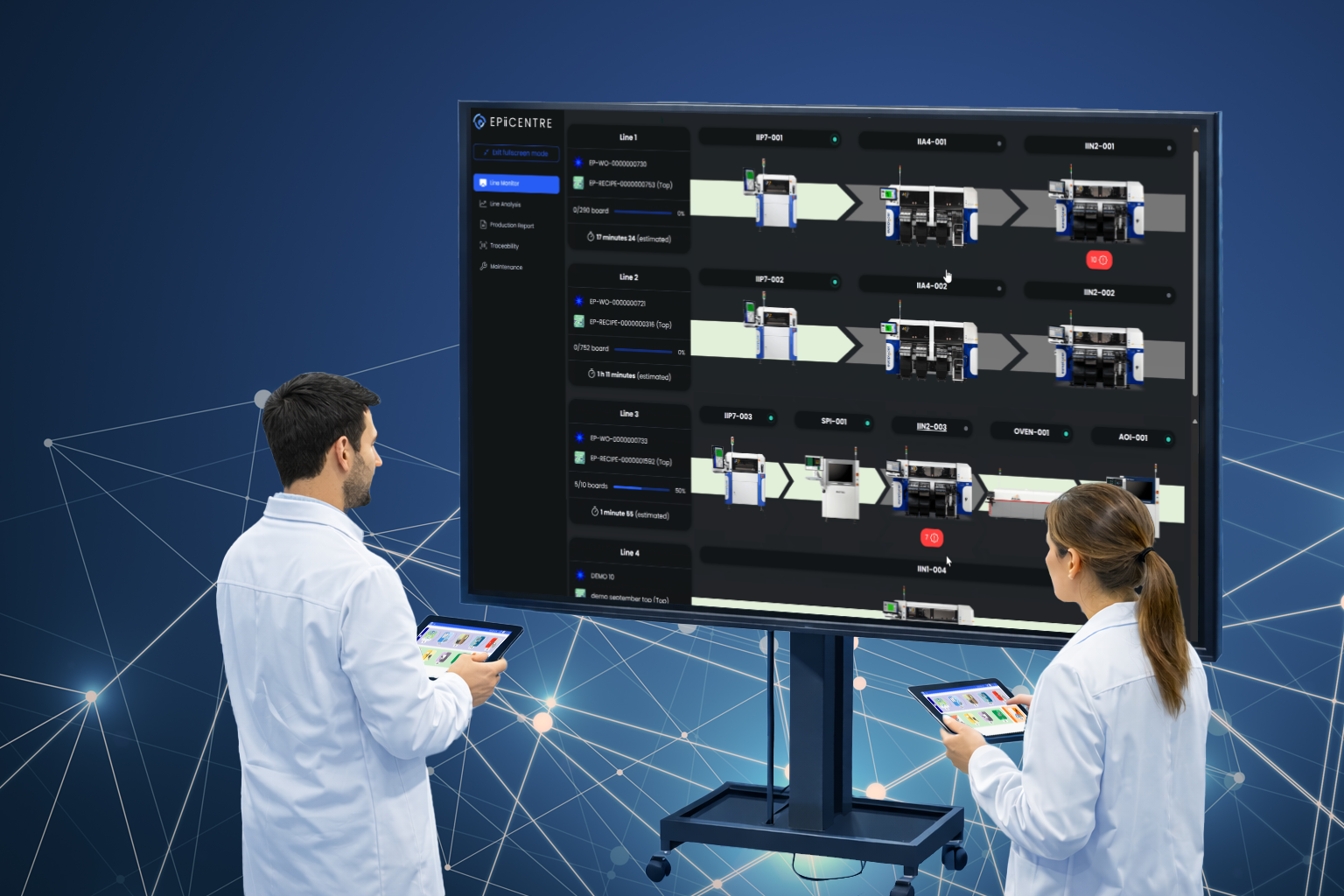
With EPiiCENTRE, Europlacer adds supervision and analysis tools that centralize and make use of production information. Production managers can therefore better understand performance, analyze events and identify potential opportunities for improvement.
The challenge is not simply to ‘just collect more data’. It is to turn production information into tools for control, decision-making and continuous improvement.
From catching defects to preventing them
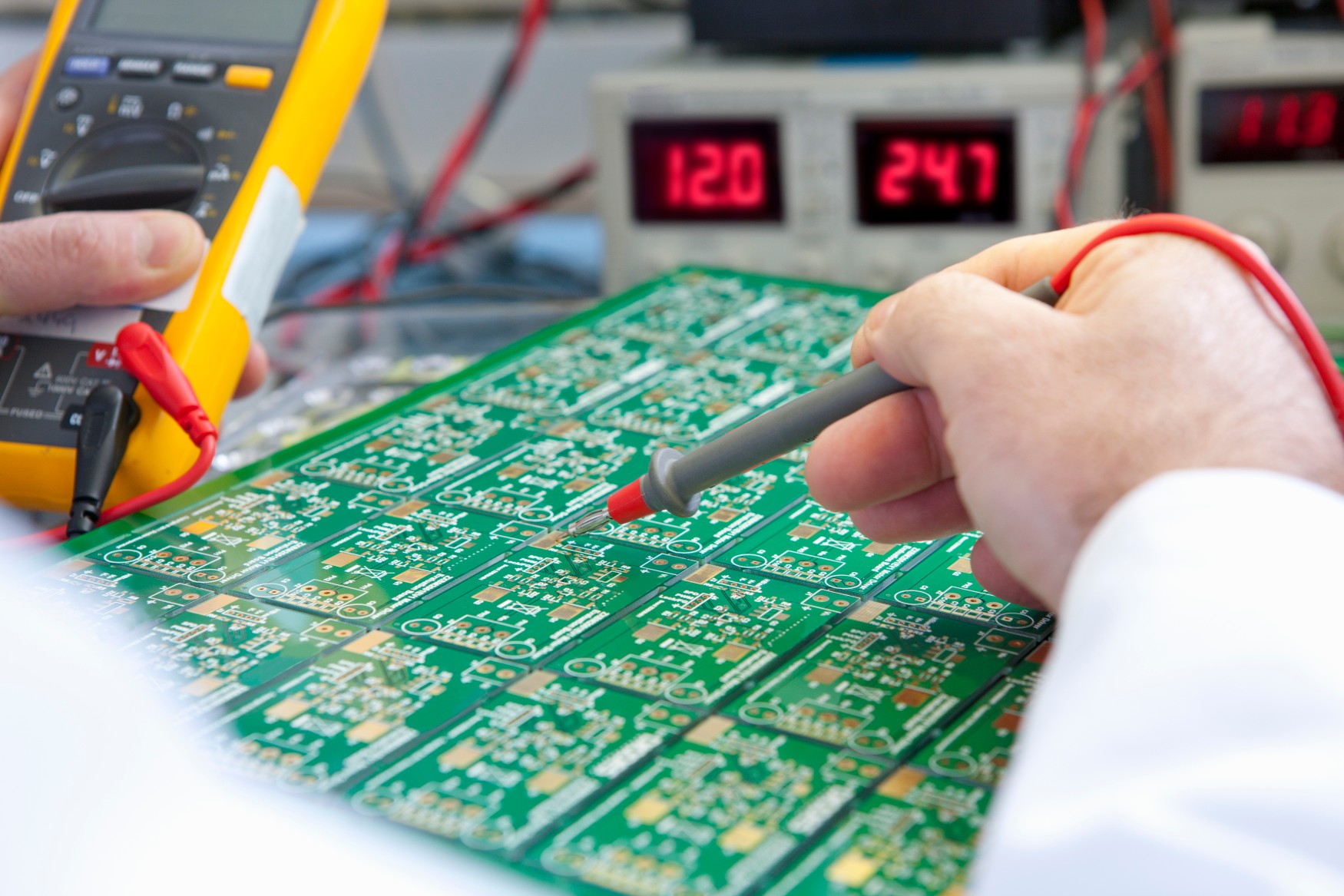
In a traditional process, quality control often steps in to record a deviation. A board is made, inspected, possibly rejected, then analyzed or repaired. Europlacer favors an approach in which checks and available information are applied as close as possible to the operations themselves.
The LCX electrical tester is a concrete example: the measurement can prevent the placement of a component identified as non-conforming. At a broader level, analyzing production data reveals trends that would be hard to spot from occasional observations. A rise in rejects on a feeder, drift in electrical characteristics or a recurring event can become indicators that guide corrective action.
This is the principle of closed-loop manufacturing: using information from the process to act on that same process. This approach supports continuous quality improvement, reduces drift and keeps industrial performance under control. It fits directly with Europlacer’s First Board Right philosophy: building the board correctly from the very first one, rather than relying on corrective operations.
Turning compliance into a competitive advantage
For an electronics contract manufacturer working in aerospace, defense, medical or automotive, the ability to demonstrate control of its production is far more than an obligation. It is a competitive differentiator.
Customers look for a partner that can produce consistently, manage risk and provide reliable information if a quality question arises. The ability to quickly identify the batches affected by an anomaly, to document the checks performed or to retrieve the events associated with a build contributes directly to that trust. It also makes audits easier, reduces the time spent on investigations, which in turn goes to strengthen the overall relationship between manufacturer and customer.
Europlacer supports this shift with technologies that improve both industrial performance and process control, because the two goals do not conflict. A better-controlled production line is also a more efficient one. Fewer errors, less rework, less material waste and fewer interruptions all boost productivity directly, while also strengthening the reliability of the products made.
Conclusion: compliance starts at the heart of the process
The most demanding industries cannot just settle for a final inspection or for traceability reconstructed after manufacture. They need processes capable of preventing errors, controlling critical operations, retaining essential information and demonstrating product compliance.
This is the vision behind Europlacer’s approach. From material preparation to electrical testing of components, from machine control to the use of production data, our solutions help build a manufacturing chain that is more reliable, more transparent and better controlled.
The aim is not only to make compliant electronic boards. It is to give manufacturers the means to control their process, prevent non-conformities and have the evidence needed to demonstrate the quality of their production.
Next Steps
Is your current pick-and-place process providing the level of traceability and process control demanded by critical applications? Contact Europlacer to explore how integrated component verification, electrical testing and production data management can help prevent defects, demonstrate compliance and deliver greater manufacturing confidence.

November 12, 2026
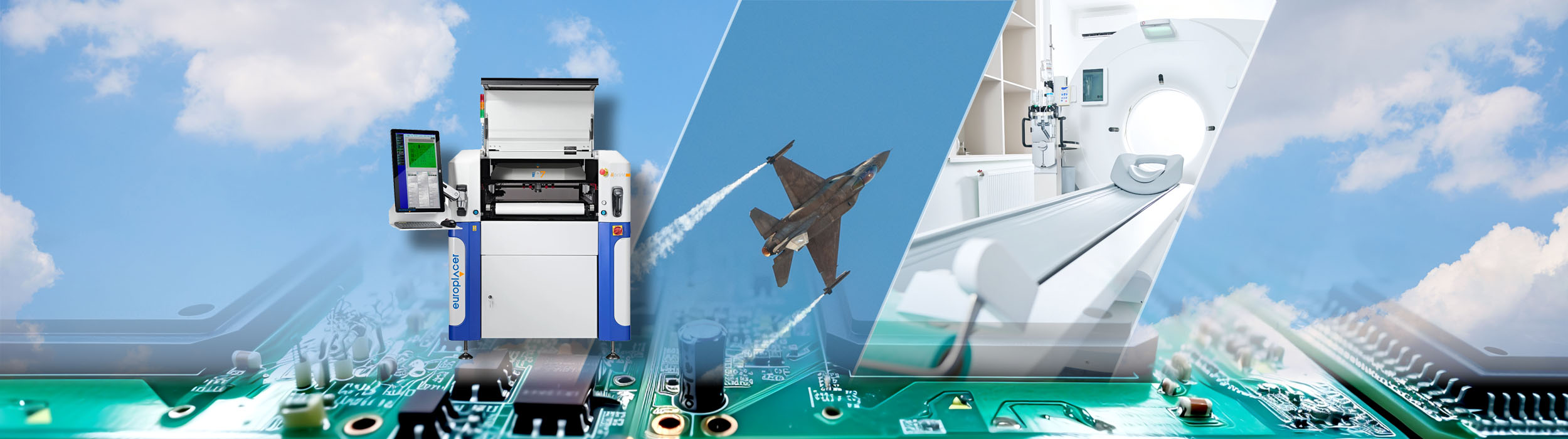
In aerospace, medical, defense and automotive electronics, a compliant board is no longer enough. Discover how built-in checks, LCX electrical testing and measured traceability secure every pick and place step, before errors ever reach the board.
September 21, 2026
In high-mix, low-volume production, a product may not be built again for months or even years, and batches are often too small to recover from a drifting process. For aerospace, defence and medical manufacturers, that makes every manual adjustment at the printer a direct cost to both capacity and quality. This article looks at how automated calibration, controlled squeegee pressure, closed-loop SPI and built-in traceability remove those variables from the first stage of the SMT line.
Find out why a stable print is the foundation of a predictable HMLV line.
July 13, 2026
In High Mix electronics manufacturing, the first board off the line is no longer just a setup step - it's where margin is won or lost.
Discover why First Board Right, powered by Europlacer's Process Integrity and Production Integrity, is becoming one of the most important economic levers in SMT production.