
Why High-Mix Manufacturing Is the New Competitive Advantage
March 5, 2026
For decades, industrial strategy was built on one core principle: produce large batches to reduce costs, spread investments, and secure long-term profits. This model made sense in a world where markets were stable, demand steady, and supply chains reliable.
That world no longer exists.
Today’s global market is volatile, fragmented, and constantly shifting because customer demand fluctuates, product lifecycles shorten, and customization has become a baseline expectation. In this new landscape, uncertainty is not an exception. It is a built-in feature of modern industry.
This is precisely why High-Mix Manufacturing is emerging as the strongest competitive advantage manufacturers can build.
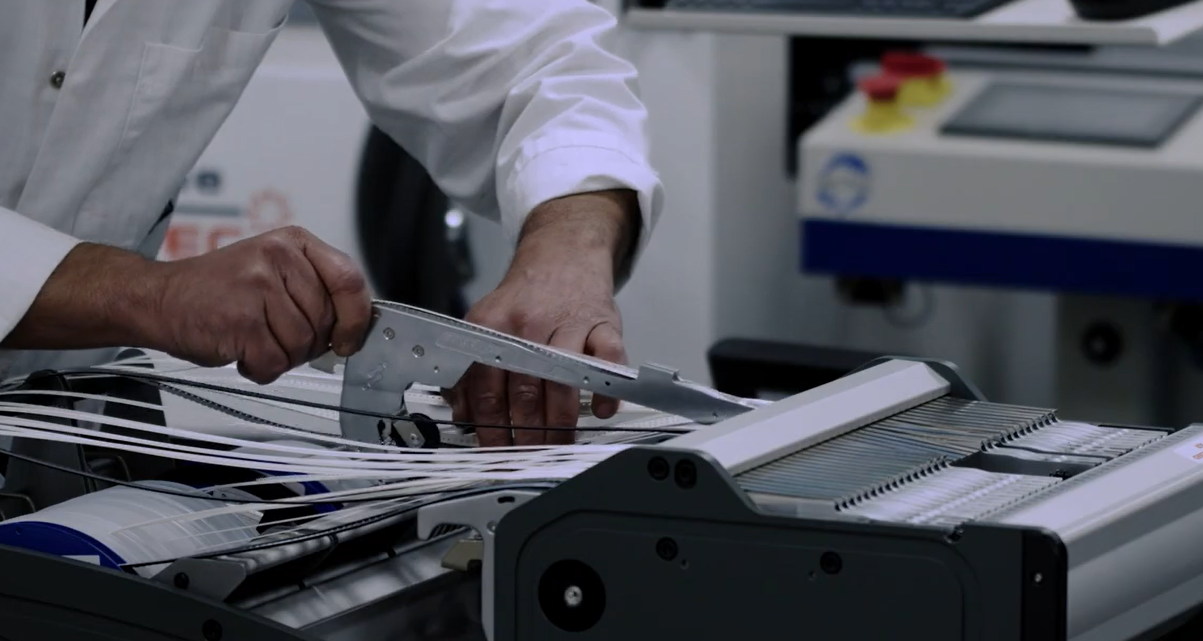
From Predictability to Agility: A Shift in Industrial Logic
Traditional high-volume industrial models were based on assumptions now under heavy pressure:
- Standard products
- Stable and repeatable demand
- Long, predictable production cycles
- Highly optimized but rigid processes
These foundations are no longer sufficient, as value creation today relies on speed of adaptation, not repetition.
High-Mix Manufacturing, whether low-volume or higher-volume, directly responds to this new reality as smaller batches, frequent changeovers, product variants, and shorter lead times are now strategic must-haves, not operational problems.
The shift is not marginal and it requires a complete redesign of industrial strategy.
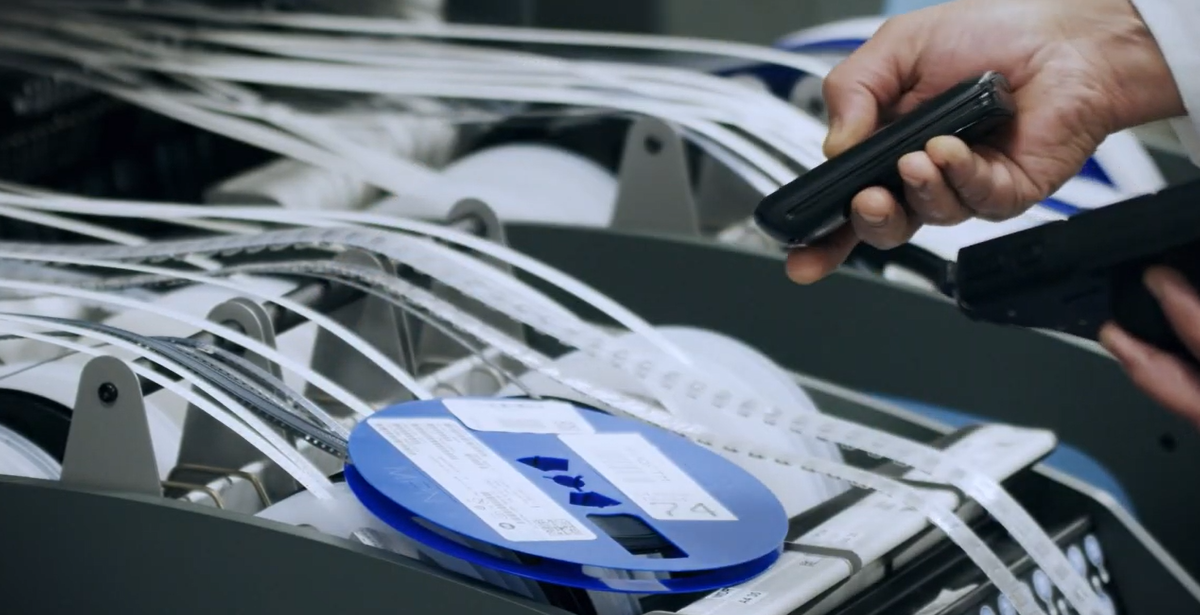
Why High-Mix Creates Competitive Advantage
1. Flexibility Becomes More Valuable Than Speed
Performance can no longer be measured only in terms of volume or machine usage. What matters is:
- Flow continuity
- Smooth transitions between products
- Stability of the process despite change
- Ability to match resources with changing demand
In modern environments, flexibility is not a cost — it is a condition for survival.
2. Complexity Must Be Managed, Not Endured
High-Mix introduces complexity across:
- Products
- Materials
- Operations
- Human allocation
Competitive companies don’t try to eliminate this complexity; they structure and master it. Productivity is no longer driven by the machine alone, but by the entire system: methods, quality, planning, material organization, and human skills.
3. Financial Performance Strongly Improves
High-Mix, when properly implemented, reduces:
- Excess inventory
- Work-in-progress
- Risk of products going out of date
- Capital being tied up
Demand-driven, aligned flows mean better cash flow and improved profits, even in unstable market conditions.
Case in Point: Brynleigh Technology Ltd, UK
A compelling real-world example of high-mix Manufacturing in action comes from Brynleigh Technology, a UK-based contract electronics manufacturer that has partnered with Europlacer for over 25 years to stay ahead of unpredictable demand and complexity. By investing in adaptable Europlacer pick-and-place platforms, Brynleigh has significantly increased throughput and reduced changeover times. This enabling them to run multiple prototypes and batch jobs in parallel and place components more than 35% faster. This flexibility has not only improved response times and quality across diverse projects, but also helped Brynleigh regain business from offshore competitors and reshore production to the UK . It is testament to how mastering variation and integrated data flows can translate directly into competitive advantage in a high-mix landscape.
Key benefits:
- Faster, more reliable changeovers enabling Brynleigh to switch seamlessly between prototypes and short-run production without disrupting flow
- Higher throughput in high-mix conditions, with greatly improved placement speed and sustained performance across a wide range of product variants
- Reduced day-to-day friction and complexity, thanks to standardized platforms and repeatable processes that stabilize production despite constant change
- Improved competitive edge and resilience, allowing Brynleigh to reshore work, respond faster to customer demand, and protect margins in volatile markets
Europlacer: A model built for high-mix by design
Some manufacturers must now radically transform their operations. Europlacer is not one of them.
Europlacer’s entire industrial DNA was built around variability, adaptability, and the mastery of High-Mix environments. Instead of being forced to adjust to market uncertainty, Europlacer naturally provides what the new industrial paradigm requires.
Europlacer’s machines, feeders, and software ecosystem were designed from the start to deliver:
- Multi-format, multi-geometry placement ability
- True process consistency
- Smooth, secured changeovers
- Matched and controlled material flow
- Reliable, relevant data for real-time decision-making
In other words: a stable process in an unstable world.
Conclusion
High-Mix Manufacturing is no longer an option or a niche strategy as it is now becoming the dominant industrial model. In a world where the only constant is change, companies capable of mastering variability gain a decisive and durable advantage.
Europlacer delivers a complete, integrated approach that connects machines, feeders, software, and organization around one single objective: controlled, reliable, high-performance High-Mix production.
In this new era, competitive advantage is not about producing more – it is about adapting faster and producing right. This is the strength of Europlacer.
Next steps:
Want to find out how Europlacer can help deliver high-mix manufacturing to your facility? Contact us to have a discussion today.
More In-the-mix articles
September 21, 2026
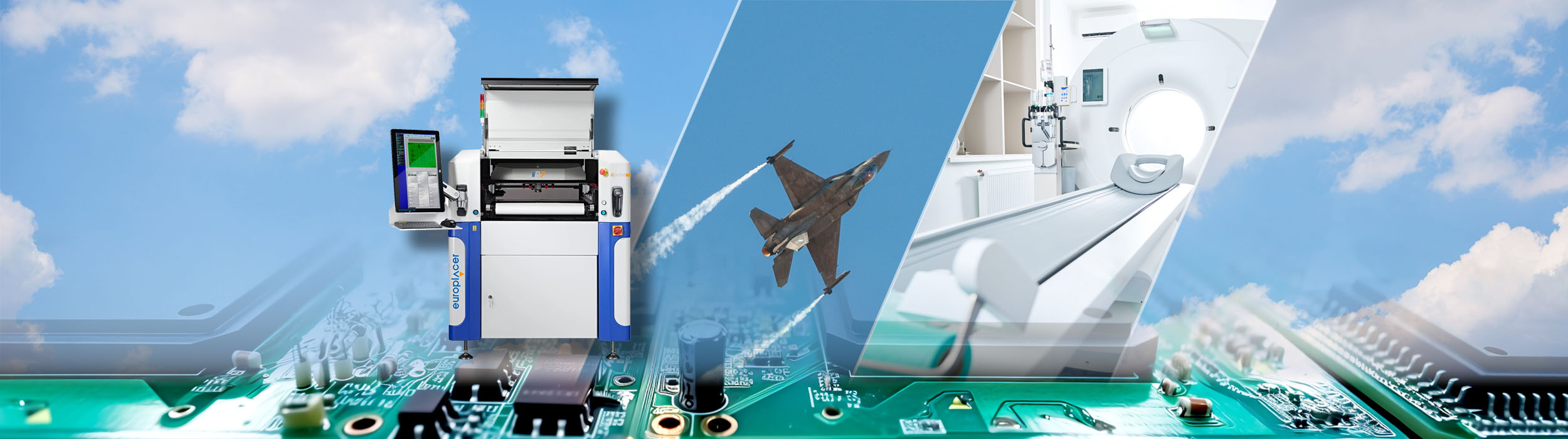
In high-mix, low-volume production, a product may not be built again for months or even years, and batches are often too small to recover from a drifting process. For aerospace, defence and medical manufacturers, that makes every manual adjustment at the printer a direct cost to both capacity and quality. This article looks at how automated calibration, controlled squeegee pressure, closed-loop SPI and built-in traceability remove those variables from the first stage of the SMT line.
Find out why a stable print is the foundation of a predictable HMLV line.
July 13, 2026
In High Mix electronics manufacturing, the first board off the line is no longer just a setup step - it's where margin is won or lost.
Discover why First Board Right, powered by Europlacer's Process Integrity and Production Integrity, is becoming one of the most important economic levers in SMT production.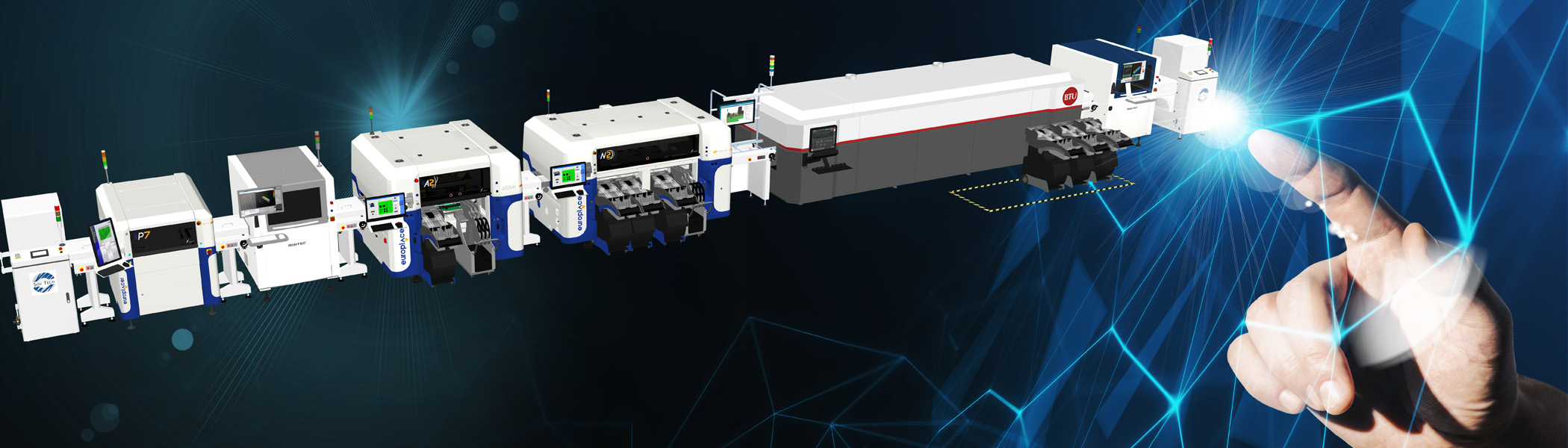
June 2, 2026
The real challenge of Industry 4.0 isn't generating more data, it's turning it into decisions you can act on. Europlacer's strategy builds on two complementary standards: Hermes for machine-to-machine continuity, and IPC CFX for transforming production events into business intelligence.
Discover how Hermes, IPC CFX, EPiiCENTRE and ii-TAB all connect the shop floor to the business, from the physical movement of every board to the decisions that drive productivity.